1¢ Franklin Issue of 1851-1857, PLATE 1 LATE.
Pos 4R1L, (Scott #7)
Type II, Relief T
Issued both imperforate and perforated.
Perforated copies are more scarce.
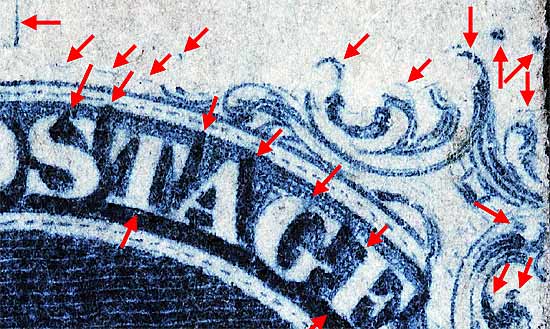
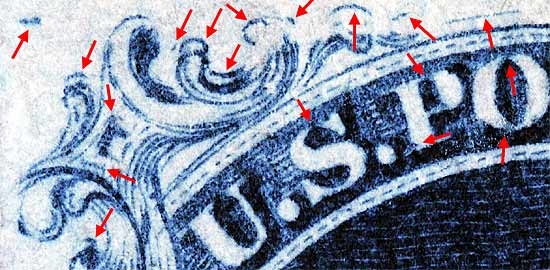
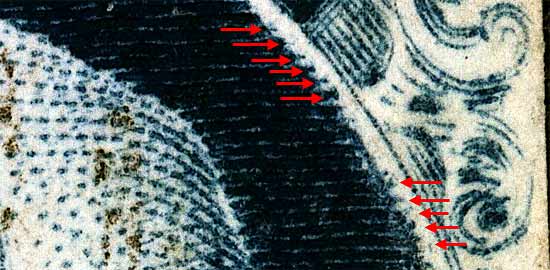
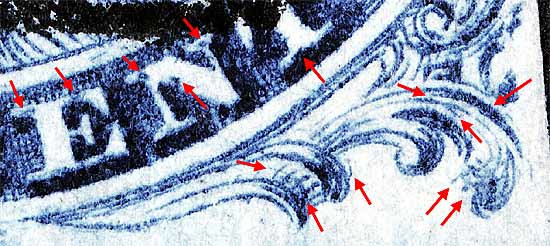
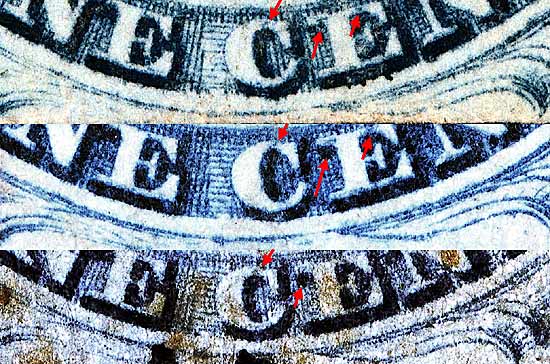
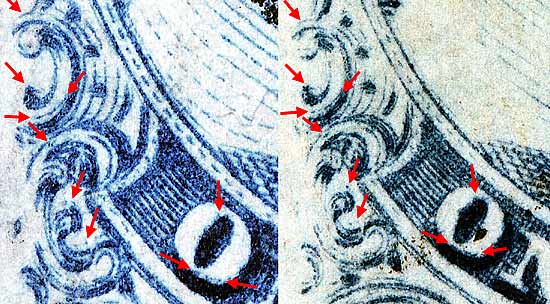
DOUBLE TRANSFER
The only position on Plate 1 Late that was not recut.
Except from Stanley Ashbrook's "The United States One Cent Stamp of 1851-57" describing the Type II 4R. (Chapter 16, pg. 141) "As stated above when the plate was altered from Early to Late, every position on the plate was recut with one exception, as no recutting occurred on 4R. Thus this lone position on the plate is the only Type II, and as such it is one the outstanding varieties of Plate One Late. No other combination of types, is more sought after than a pair, showing a Type II and a Type IV. From Plate One Early we can obtain, of the less scarce types, pairs of Type II and IIIA, and the same combinations of the same types can be obtained from Plate 4, but a pair, strip or block including 4R1L seems to be in greater demand than the combinations mentioned above. The reason is, because quite a number of positions on these two plates furnish such type combinations whereas to obtain a IV plus II one must have a 4R paired with either a 3R, a 5R, or a 14R, anyone of which is equally good." In addition to the lack of recutting on 4R, together with 5R, both positions are the most pronounced of all double transfers on Plate One Late, with the whole parts of both positions being distinctly doubled. This makes identification of 4R (and 5R) quite easy.
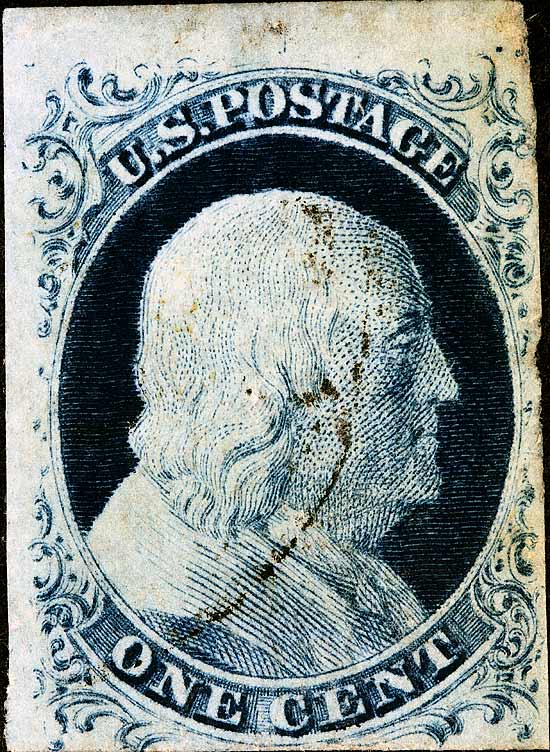
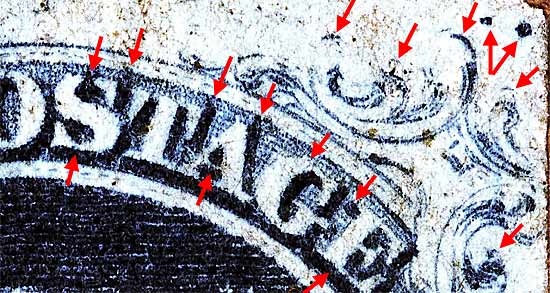
Figure 1a. (Below) The vertical line above the "O" and "S" of POSTAGE is not shown on the Ashbrook/Neinken plating diagrams.
Thanks for visiting this site. I hope you learn something new as we are making new discoveries all the time. You, the visitor, have my permission to link to my pages and to share the INFORMATION with others. The images themselves fall under the fair use guidelines established by the United States Congress and Copyright law. Basically contact us before using. I also ask in return that you send me an e-mail if I have made a mistake, or have made some other technical blunder that in my rush to put these pages up would cause the visitor confusion. Please also visit my other website at www.slingshotvenus.com. and support the live music arts. While your there, be sure to purchase our music. There are not many philatelic rock stars around and we need all the help we can get. :-)
I can be reached at: nerdman@ix.netcom.com
Copyright © 2001-2009 Richard Doporto, Sonic Imagery Labs